There is a moment in every hard workout, every long race, every intense training session where your clothing either becomes invisible or becomes the problem. When it becomes invisible, you are wearing something that is doing its job so well you have stopped noticing it. When it becomes the problem, you feel it in every way at once. The heavy, wet fabric clinging to your skin. The chafing that starts small and becomes unbearable. The rising body temperature that your sweat should be managing but is not because your clothing has turned into a sponge rather than a system. That difference, between clothing that disappears and clothing that gets in your way, is almost entirely determined by the fabric it is made from. Moisture wicking sports fabrics are not a marketing category. They are a genuine performance variable, and understanding which ones work, why they work, and which ones are best suited to your specific athletic demands is knowledge that pays back every time you train. This guide covers all of it, from the science of how wicking works to the specific fabrics that do it best across different athletic contexts.
What Moisture Wicking Actually Means
The term moisture wicking appears on the hangtag of almost every piece of athletic clothing sold today, applied so broadly that it has started to lose meaning for many consumers. It is worth restoring that meaning, because understanding what wicking actually involves is the foundation for evaluating which fabrics genuinely deliver the property and which ones claim it without fully earning it. Moisture wicking refers to the ability of a fabric to move liquid moisture, specifically sweat, away from the skin surface and transport it outward through the fabric structure to the outer surface, where it can evaporate into the surrounding air. The process has two distinct phases that are often collapsed into a single description but are actually separate properties that different fabrics deliver to different degrees. The first phase is moisture transport, the movement of sweat molecules from the inner surface of the fabric that contacts the skin to the outer surface that contacts the air. The second phase is moisture evaporation, the release of that transported moisture from the outer fabric surface into the air as water vapor. Both phases must work effectively for a fabric to be genuinely high-performing in moisture management. A fabric that transports moisture quickly from the skin to its outer surface but then holds that moisture at the outer surface without evaporating creates a wet outer surface that loses heat through conduction rather than evaporation, which is a different and often less effective cooling mechanism. A fabric that evaporates quickly but does not transport moisture away from the skin efficiently leaves the skin wet while the outer surface of the fabric remains dry, which is the characteristic failure mode of some loosely woven natural fabrics. The best moisture wicking sports fabrics excel at both phases, creating a continuous system that keeps the skin dry, supports the body’s natural evaporative cooling mechanism, and maintains the thermal comfort that allows athletes to perform at their best throughout a training session or competition.
The Science Behind Wicking: Capillary Action and Fiber Structure
How Fabric Structure Moves Sweat
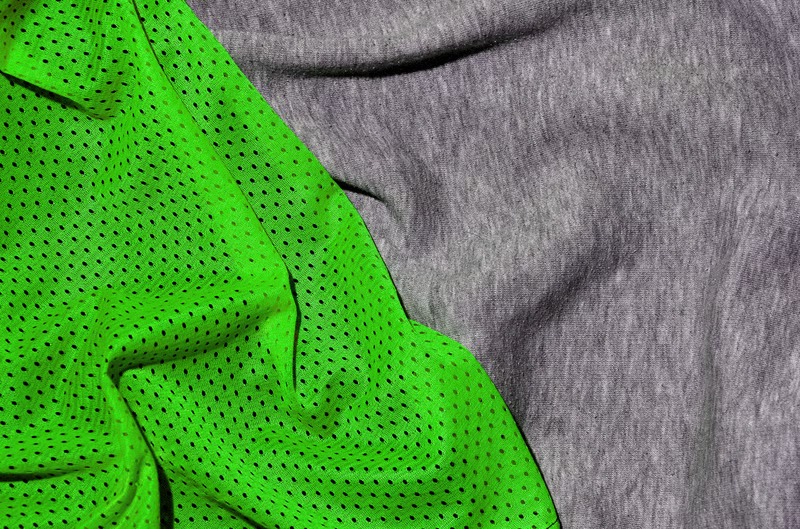
The physical mechanism that enables moisture wicking in sports fabrics is capillary action, the same phenomenon that causes water to climb the interior of a narrow tube against gravity. In a wicking fabric, the spaces between individual fibers and the channels within the yarn structure act as microscopic capillary tubes. When sweat contacts the inner surface of the fabric, surface tension and the adhesive properties of the fiber surface cause the liquid to be drawn into and through these capillary channels, transported outward through the fabric thickness by the differential between the wet inner surface and the relatively drier outer surface. The efficiency of this capillary action is determined by several interconnected fabric properties. The diameter of individual fibers matters significantly: finer fibers create smaller interfiber spaces with greater capillary pressure that draws moisture more actively. This is one reason why microfiber fabrics, made from fibers with diameters measured in micrometers, generally wick more effectively than fabrics made from coarser fibers of the same polymer type. The cross-sectional shape of individual fibers also affects wicking performance. Round fibers pack together in ways that create certain channel geometries, while non-round fiber cross-sections, including star-shaped, X-shaped, or grooved profiles, create different channel structures that can enhance capillary action in specific ways. Many of the most sophisticated moisture wicking sports fabrics use proprietary fiber cross-sections specifically engineered to optimize capillary transport. The hydrophilicity or hydrophobicity of the fiber surface, meaning how attracted or repelled the fiber surface is to water molecules, determines how readily moisture is picked up from the skin and how readily it is released at the outer surface. This creates an interesting engineering challenge: a fiber surface that is too hydrophilic holds moisture too well and becomes saturated, while a surface that is too hydrophobic repels moisture rather than transporting it. The best performing fabrics balance these properties carefully.
Why Cotton Fails Athletes Despite Being Natural
Before discussing the fabrics that perform well, it is worth understanding clearly why cotton, the fabric that dominated athletic wear for most of the 20th century, performs so poorly as a moisture management textile for serious athletic use. Cotton is composed of cellulose fibers that are naturally highly hydrophilic. Cotton readily absorbs moisture from its environment, which is why cotton towels and cotton denim feel soft and comfortable in everyday use. But this same high absorbency is the source of cotton’s fundamental problem in athletic applications. Cotton fibers absorb moisture and hold it within the fiber structure rather than transporting it through the fabric and releasing it at the outer surface. A cotton shirt absorbs sweat, becomes saturated, and holds that saturated state against the skin. The fabric becomes heavy as it absorbs moisture, sometimes increasing significantly in weight during intense exercise. It loses most of its thermal insulation properties when wet, which is dangerous in cold conditions. It dries slowly because moisture must evaporate from within the fiber structure rather than from a surface film. And it creates the wet, heavy, chafing-prone experience that any athlete who has worn a saturated cotton shirt during a long run or intense training session knows intimately. Cotton’s moisture behavior makes it thermally inappropriate for intense athletic use in warm conditions, thermally dangerous in cold and wet conditions, and mechanically uncomfortable throughout. The movement away from cotton toward synthetic moisture wicking sports fabrics in athletic apparel is not a fashion shift or a marketing decision. It is a performance response to a genuine physical limitation of the material.
Polyester: The Foundation of Modern Athletic Fabrics
Polyester is the most widely used fiber in moisture wicking sports fabrics and the baseline against which other performance fabrics are typically measured. It dominates athletic apparel manufacturing for a combination of reasons that begin with performance but extend to cost, durability, versatility, and manufacturing flexibility. Polyester is inherently hydrophobic at the fiber level. Polyester molecules do not form hydrogen bonds with water molecules in the way that natural fibers do, which means polyester does not absorb moisture into its fiber structure. Sweat on the surface of polyester fabric sits at the fiber surface rather than penetrating into the fiber, which means it is available for capillary transport through the interfiber spaces immediately without first needing to saturate the fiber itself. This is the foundational reason why polyester-based fabrics generally out-perform cotton in moisture management: the moisture stays available for transport rather than being absorbed and locked into the fiber. The specific moisture-wicking performance of polyester fabrics varies enormously based on fiber fineness, fiber cross-section geometry, yarn construction, and fabric structure. A basic polyester knit fabric has meaningful wicking capability compared to cotton but considerably less than a technical microfiber polyester constructed with engineered fiber cross-sections and optimized yarn architecture. The top-performing polyester athletic fabrics use fiber diameters in the range of one to two denier, significantly finer than standard polyester fibers, arranged in yarn structures that maximize the number and efficiency of capillary channels through the fabric thickness. Brands including Nike, Adidas, Under Armour, Asics, and virtually every other major athletic apparel manufacturer have proprietary polyester-based fabric technologies with names like Dri-FIT, Climalite, HeatGear, and Ventilate that represent specific engineering approaches to optimizing polyester’s natural wicking tendency through fiber and fabric construction choices.
Expert Perspective: “Polyester gets dismissed by some athletes who prefer natural fibers, but the performance data is clear. In warm to moderate conditions with sustained sweating, a well-engineered polyester microfiber fabric keeps athletes drier and cooler than any natural fiber alternative currently available at scale. The engineering of polyester fabrics for athletic performance has advanced enormously in the last two decades. What performs in laboratory testing and what performs on the track are increasingly the same thing.” – Dr. Amara Diallo, Textile Science and Athletic Performance Research, Loughborough University
Nylon: The Strength and Softness Alternative
Nylon shares polyester’s fundamental hydrophobic character but brings a different set of physical properties that make it the preferred choice over polyester in specific athletic applications. Nylon fibers are generally softer and have a silkier hand feel than polyester at comparable fiber fineness, which matters significantly in applications where the fabric is in sustained contact with sensitive skin areas, including close-fitting compression garments, base layers for endurance sports, and athletic undergarments. Nylon also has superior abrasion resistance compared to polyester, making it the preferred fabric for athletic applications that involve sustained friction or contact with rough surfaces, including trail running, climbing, and sports that involve contact with equipment or court surfaces. The moisture-wicking performance of nylon is comparable to polyester at equivalent fabric constructions, with the same capillary-action transport mechanism operating through the hydrophobic interfiber spaces. Like polyester, nylon’s wicking performance is significantly enhanced by finer fiber diameters and engineered cross-sections. One area where nylon has historically shown a performance advantage over standard polyester is in managing moisture in sustained, high-humidity conditions where the ambient air’s capacity to accept evaporated moisture is reduced. In high-humidity environments, the rate-limiting step in the wicking process shifts from moisture transport to moisture evaporation, and certain nylon fabric constructions handle this transition more effectively than comparable polyester constructions, though the mechanisms involved are complex and depend heavily on specific fabric architecture rather than fiber type alone. Nylon is more expensive than polyester to produce, which is why it is more commonly found in premium athletic apparel and specific performance-critical applications rather than across the full range of athletic wear price points.
Merino Wool: The Natural Fiber That Genuinely Performs
Why Merino Is Different From Regular Wool
Merino wool occupies a unique position in the landscape of moisture wicking sports fabrics because it is the only natural fiber that competes seriously with synthetic alternatives for athletic moisture management performance. Understanding why merino performs so differently from regular wool and from cotton requires understanding its specific fiber structure and moisture management mechanism, which are genuinely different from those of synthetic fabrics in ways that create both advantages and limitations. Merino wool fibers are significantly finer than standard wool fibers, with diameters typically in the range of 15 to 24 microns compared to 30 to 40 microns for coarser wool types. This fineness is what eliminates the scratchy quality that makes regular wool uncomfortable against skin and what allows merino to be worn comfortably as a direct skin-contact athletic layer. The moisture management mechanism of merino wool is fundamentally different from that of synthetic fabrics. Merino fibers are hygroscopic, meaning they absorb moisture from the surrounding environment into their fiber structure, but they manage this absorption through a two-zone fiber architecture that allows them to absorb significant moisture, up to approximately 30 percent of their dry weight, while still feeling dry against the skin. The outer cortex of the merino fiber is hydrophobic while the inner medulla is hydrophilic, creating a moisture transport pathway that moves sweat away from the skin-contacting surface into the fiber interior. This mechanism is slower than the capillary transport of synthetics but it produces a distinct and valuable performance characteristic: merino fabric feels dry to the touch even when it has absorbed meaningful amounts of moisture.
Merino’s Temperature Regulation and Odor Resistance Advantages
The performance case for merino wool in moisture wicking sports fabrics extends beyond its moisture management mechanism to two additional properties that synthetic fabrics struggle to match. Temperature regulation in merino wool occurs through the same moisture absorption mechanism that manages sweat. When merino fibers absorb moisture from the skin, the process releases a small amount of heat through the exothermic reaction of moisture absorption. In cold conditions, this heat release provides a warming effect that makes merino base layers genuinely warmer than synthetic alternatives at comparable thickness. In warm conditions, the evaporation of moisture from the fiber surface provides a cooling effect. This bidirectional thermal response makes merino uniquely effective across a wide temperature range, which is why it dominates in outdoor and mountain sports where athletes face rapidly changing conditions. Odor resistance is merino wool’s most discussed advantage over synthetic fabrics, and it is a genuine and significant performance difference rather than a marketing claim. The wool fiber’s protein structure includes lanolin and specific amino acid configurations that inhibit the growth of the odor-causing bacteria that colonize sweat-saturated synthetic fabrics. A merino base layer worn through a long backcountry day will produce dramatically less odor than a comparable polyester layer under the same conditions. For multi-day events, adventure races, or any athletic activity where access to laundry facilities is limited, this odor resistance has practical performance implications that extend beyond comfort.
Final Thought
The fabric against your skin during athletic performance is not a passive variable. It is an active participant in the conversation between your body and the demands you are placing on it. Moisture wicking sports fabrics at their best make that conversation easier by supporting the body’s natural thermoregulation system, keeping the skin dry, reducing the friction and discomfort of wet fabric, and maintaining the thermal environment that allows sustained physical effort. At their worst, the wrong fabric makes every mile harder, every rep heavier, and every minute of effort more uncomfortable than it needs to be. The knowledge to choose correctly is not complicated once you understand what wicking actually involves, which fabrics deliver it and why, and which ones suit the specific demands of your sport and your training environment. Your performance deserves the right foundation. Start with what you wear.